
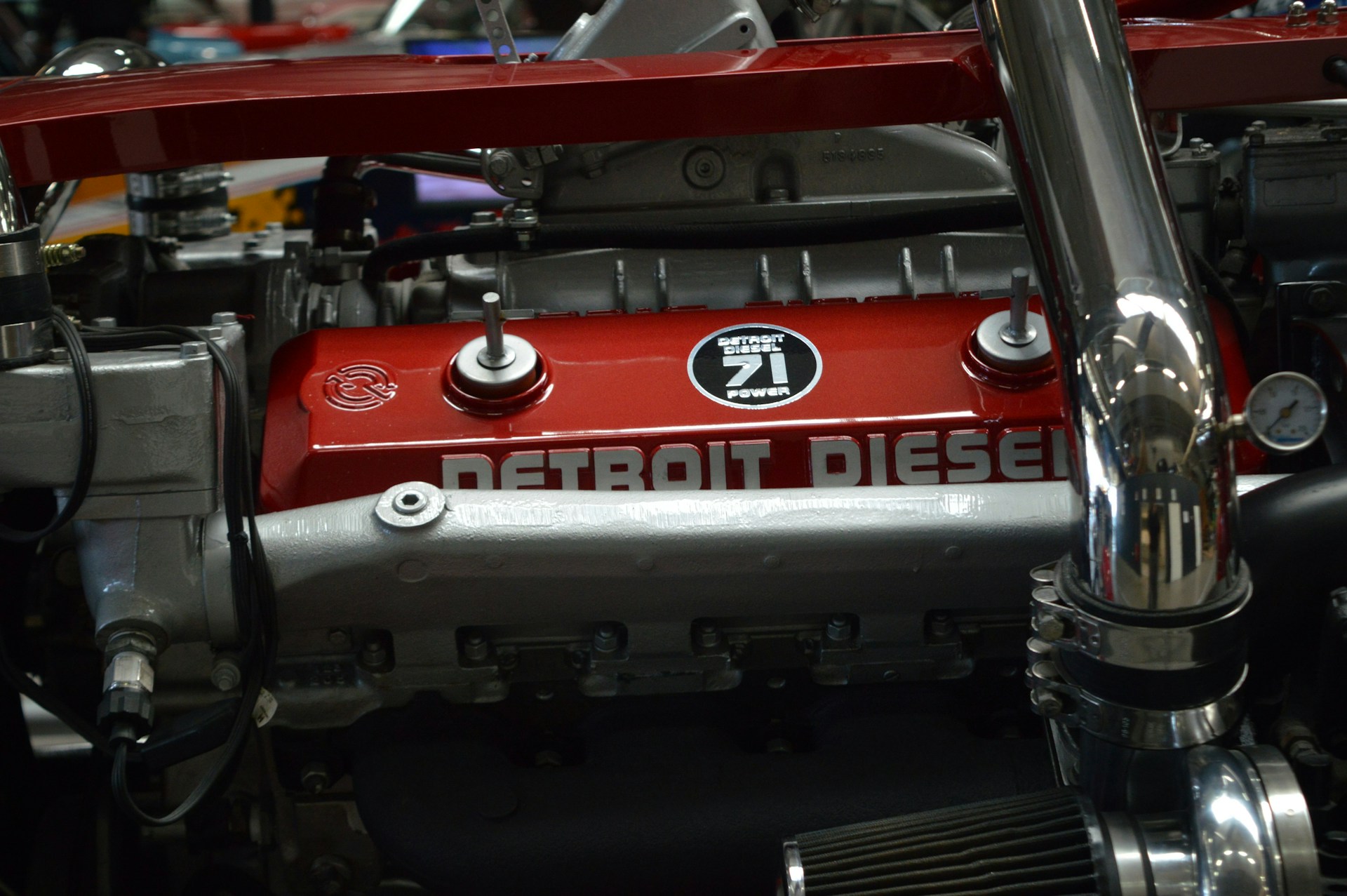
There's a common assumption that any competent mechanic can work on any vehicle. And for a lot of basic jobs, brakes, tires, oil changes, that's largely true. But when it comes to diesel engines, the gap between a general auto shop and a diesel specialist is wider than most truck owners realize. And the difference shows up in your repair bill, your diagnostic accuracy, and the long-term health of your engine.
Here's why it matters, and what to look for when you're choosing a shop for your diesel truck in Nampa or anywhere in the Treasure Valley.
Diesel and Gas Engines Are Fundamentally Different
It sounds obvious when you say it out loud, but diesel engines don't just run on different fuel. They operate on entirely different principles. A gasoline engine uses spark plugs to ignite a fuel-air mixture. A diesel engine relies on compression alone, the air gets compressed so tightly that it heats up enough to ignite the fuel on its own.
That difference in design cascades into almost every other system on the vehicle. Diesel engines run at higher compression ratios, generate more torque at lower RPMs, and put significantly more stress on their components over time. They also have systems that gas engines simply don't have, including diesel particulate filters, exhaust gas recirculation systems, high-pressure common rail fuel delivery, and on many trucks, variable geometry turbochargers with electronic actuators.
A shop that primarily works on gas-powered vehicles can absolutely handle oil changes and basic maintenance on a diesel. But when something more complex goes wrong, the diagnostic approach, the tooling, and the experience needed to get it right are all different.
Diesel Diagnostic Tools Are Not Universal
Modern diesel trucks produce fault codes just like gas vehicles, but reading those codes correctly requires software and hardware that goes deeper than a standard OBD-II scanner. Diesel-specific diagnostic platforms can access manufacturer-level data, monitor live boost pressure, fuel rail pressure, injector performance, and regeneration cycles in ways that a generic scan tool simply can't.
This matters because a fault code tells you where to look, not necessarily what's wrong. A technician who works on diesel engines regularly knows how to interpret what the data is actually saying, and how to distinguish between a sensor fault, a mechanical problem, and a software issue. That kind of pattern recognition comes from repetition, and it's hard to develop if diesel trucks are only a fraction of what a shop sees on a given week.
Common Diesel Problems Require Specialized Experience
Some of the most frequent issues on diesel trucks, DPF clogging, injector wear, turbocharger failure, high-pressure fuel pump problems, are things that a lot of general shops don't have the experience or equipment to address confidently. It's not that they're incapable. It's that these systems are specific enough that they really benefit from a technician who has diagnosed the same failure mode dozens of times and knows the nuances.
Take turbochargers, for example. A diesel turbo operates under conditions that are genuinely extreme, high heat, high speed, constant oil flow requirements. Diagnosing a turbo problem correctly means understanding the relationship between boost pressure, wastegate function, oil supply, and intake restriction all at once. Get one of those wrong and you'll replace the turbo only to have the new one fail for the same underlying reason. An experienced diesel tech has seen that scenario enough times to know what to check first.
The same applies to DPF service, fuel system diagnostics, and transmission work on diesel-specific platforms like the Allison or the 68RFE. These aren't areas where general experience translates cleanly.
What to Look For in a Diesel Specialist
When you're evaluating a shop for your diesel truck, a few things are worth asking about directly.
ASE certification matters, but diesel-specific certifications matter more. Look for technicians certified in diesel engines and medium/heavy truck systems specifically. NAPA Master Tech status is another indicator that a shop's technicians have met rigorous training standards.
Ask whether the shop works on diesel trucks regularly, not occasionally. There's a difference between a shop that will take on a diesel job and one where diesel trucks are a normal part of the daily workflow.
Ask about their scan tools and whether they can pull manufacturer-level diagnostic data on your specific platform. If you're driving a Cummins-powered Ram, a Duramax-powered GM, or a Powerstroke-powered Ford, that's worth asking about specifically.
And look for shops that are willing to explain what they found before they start work. A confident diesel specialist will show you the data, walk you through the diagnosis, and give you a clear picture of what the repair involves.
Ray's Diesel in Nampa. Built Around Diesel.
Ray's Diesel & Automotive Repair was built around diesel. It's in the name, and it shows up in how we work. Our ASE-certified and NAPA Master Tech technicians bring a combined 110 years of experience to every job, and diesel trucks are a core part of what we do every day, not an occasional visitor.
We're NAPA Gold Certified, AAA Approved, and equipped to handle the full range of diesel repair and maintenance services, from Engine Repairs and Turbo Rebuilds to DPF service, transmission work, and electrical diagnostics. Every repair is backed by a three-year, 36,000-mile NAPA warranty, and we offer 12-month no-interest financing through Synchrony for larger jobs.
We're located at 2002 West Karcher Rd in Nampa and serve customers throughout the Treasure Valley including Caldwell, Meridian, Boise, and Kuna. No appointment is needed for a diagnostic scan. Stop by or give us a call at (208) 391-6067 and let's take a look at what your truck needs.